
October 18, 2020: Twentieth Sunday After Pentecost
October 14th, 2020: Day School Chapel
October 11, 2020: The Nineteenth Sunday
October 7th, 2020: Day School Chapel
October 4, 2020: The Eighteenth Sunday after Pentecost
September 30th, 2020: Day School Chapel
September 27th, 2020: The Feast of St. Michael and All Angels
September 23rd: Day School Chapel
September 20, 2020: The Sixteenth Sunday after Pentecost
September 16th, 2020: Day School Chapel
September 13, 2020: The Fifteenth Sunday after Pentecost
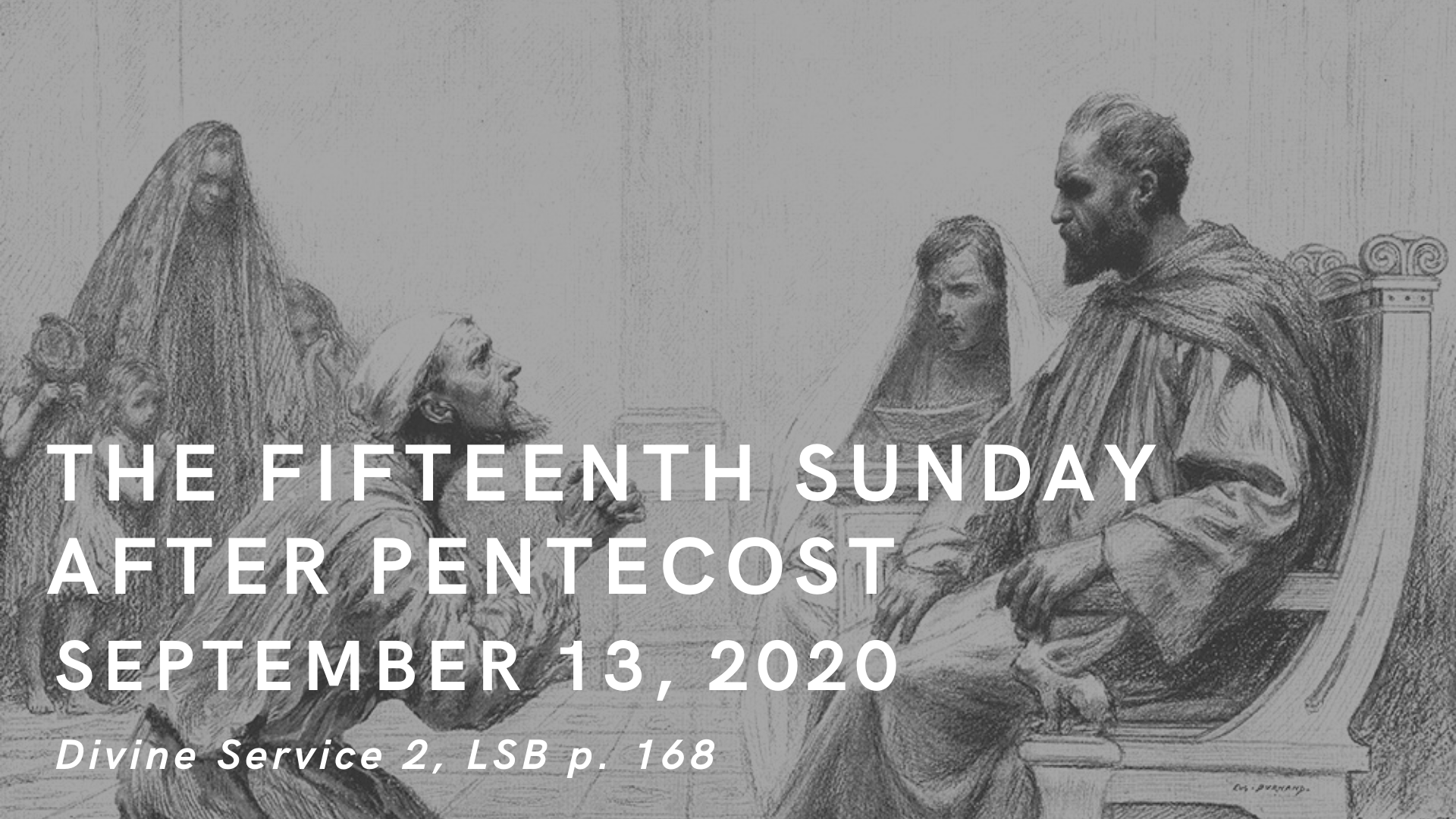
Forgiving as the Lord Forgives Us
In settling His accounts with us, our Lord acts not with anger, but with compassion. He does not imprison us as we deserve, but He forgives all our debts and releases us (Matt. 18:23–27). Therefore, our Lord bids each of us to have “mercy on your fellow servant” and “forgive your brother from your heart” (Matt. 18:33, 35). By the Lord’s forgiveness of our sins, we are free to forgive those who sin against us, because He has been handed over to the jailers in our stead and He has paid our entire debt with His lifeblood. Whether we live or die, we “are the Lord’s” (Rom. 14:8). Since we all will “stand before the judgment seat of God,” we are not to despise our brother (Rom. 14:10), but gladly forgive him. By the grace of God, our brother also “will be upheld, for the Lord is able to make him stand” (Rom. 14:4). Though we daily sin against each other, the Lord intends “to bring it about that many people should be kept alive” (Gen. 50:20). Jesus speaks kindly by His Gospel and promises: “I will provide for you and your little ones” (Gen. 50:21).
September 9th, 2020: Day School Chapel
September 6, 2020: The Fourteenth Sunday after Pentecost
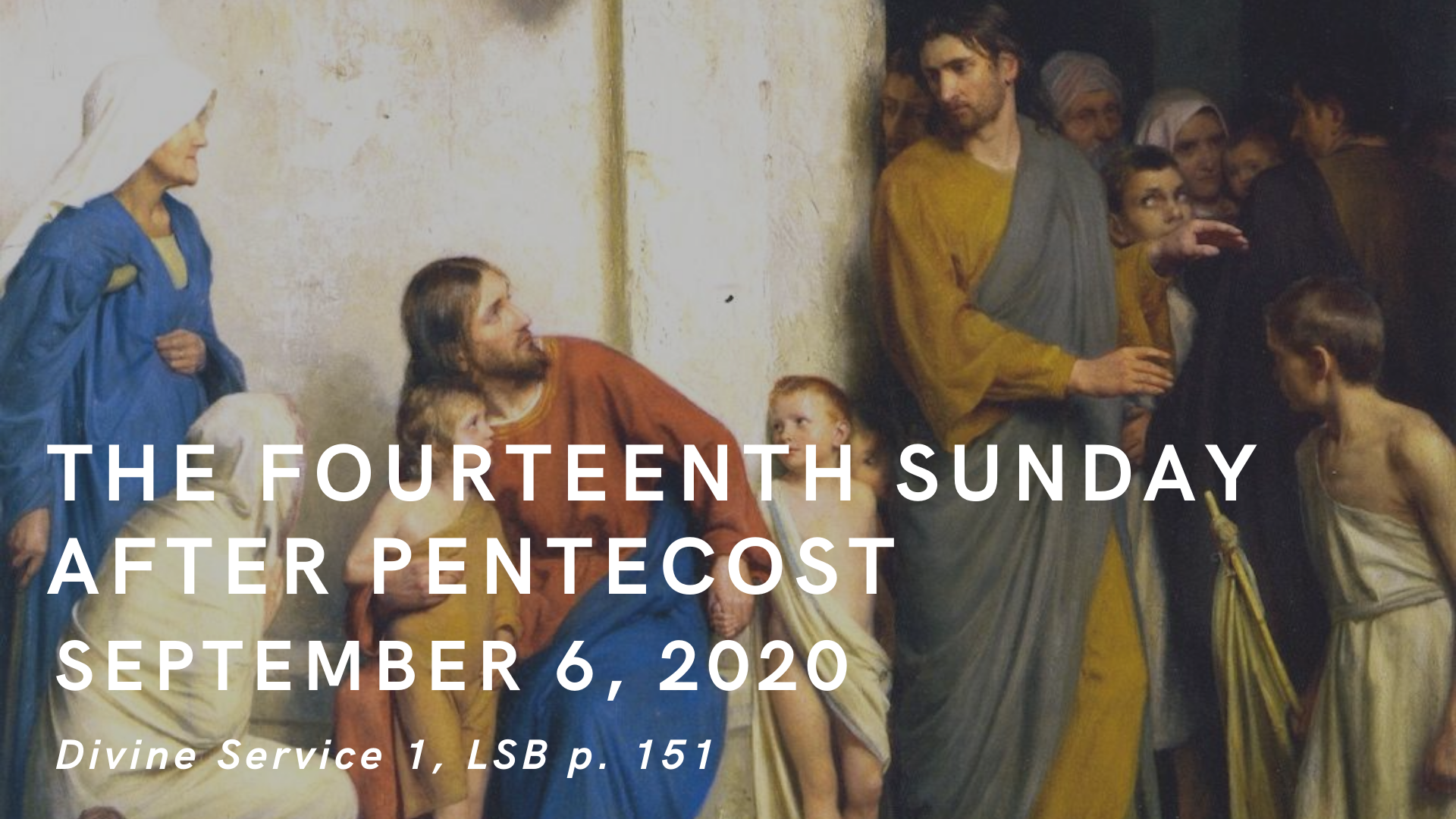
Living as Humble Little Children of the Father
True greatness is not self-sufficient strength, but humility like that of a little child. The greatness of childlike faith receives all good things as gracious gifts from our Father in heaven. Apart from such faith, “you will never enter the kingdom of heaven,” but whoever is humbled like a little child will be “the greatest in the kingdom of heaven” (Matt. 18:3–4). Though in our sin we deserve to be “drowned in the depth of the sea” (Matt. 18:6), we have instead been drowned (“buried”) with Christ in Baptism and then raised to the new, humble life of a child of God. The Lord sends His watchman to warn us with a word from His mouth, in order that we may not die in our iniquity but be turned from our pride and selfishness to live (Ezek. 33:7–9). Thus, we live in humility and faith before God as well as in love for our neighbor, which “is the fulfilling of the law” (Rom. 13:10). In the reverent fear of God, we do no harm to our neighbor, but we “pay to all what is owed to them” (Rom. 13:7) and we “owe no one anything, except to love each other” (Rom. 13:8).
September 2, 2020: Day School Chapel
August 30, 2020: The Thirteenth Sunday after Pentecost

The Glory of God Is the Passion and Cross of Christ Jesus
After St. Peter confessed that Jesus is the Christ, the Son of the living God, our Lord “began to show his disciples that he must go to Jerusalem and suffer many things from the elders and chief priests and scribes, and be killed, and on the third day be raised” (Matt. 16:21). Upon hearing this “theology of the cross,” Simon Peter stumbled into a satanic “theology of glory.” But the glory of God is revealed in the Passion and cross of His incarnate Son. The faithful prophets, such as Jeremiah, suffered persecution and rejection in anticipation of Jesus’ cross. Yet the Lord did not abandon them; He remembered them, and He was with them to deliver them (Jer. 15:15–20). By His cross, Jesus has redeemed the world, and in His resurrection, He has vindicated all who trust in Him. Thus, the Christian life is a discipleship of self-sacrificing love. Since Christ Jesus has reconciled us to God, we “live peaceably with all” (Rom. 12:18). By the certainty of His cross and resurrection, we “rejoice in hope,” and we are “patient in tribulation” and “constant in prayer” (Rom. 12:12).
August 26, 2020: Day School Chapel
August 23, 2020: The Twelfth Sunday after Pentecost

The Lord Jesus Christ Is the Son of the Living God
Jesus asked His disciples: “But who do you say that I am?” (Matt. 16:15). The question is also put to us: Who do you say that He is? Flesh and blood do not reveal this to us, but by the ministry of the Gospel, the Father in heaven reveals His Son to us on earth, who has become flesh and suffered death for our salvation. Thus, we believe and confess that He is “the Christ, the Son of the living God” (Matt. 16:16). As He died for our transgressions and was raised for our justification, He looses us from all our sins and preserves our life within His Church, against which even “the gates of hell shall not prevail” (Matt. 16:18–19). His salvation is forever, and His righteousness “will never be dismayed” (Is. 51:6). He comforts us with the Gospel in His Church, so that “joy and gladness will be found in her, thanksgiving and the voice of song” (Is. 51:3). Therefore, “according to the measure of faith that God has assigned” (Rom. 12:3), we also offer ourselves “as a living sacrifice, holy and acceptable to God” (Rom. 12:1) through Jesus Christ, our Lord.
August 18, 2020: Day School Chapel
August 16, 2020: The Eleventh Sunday after Pentecost
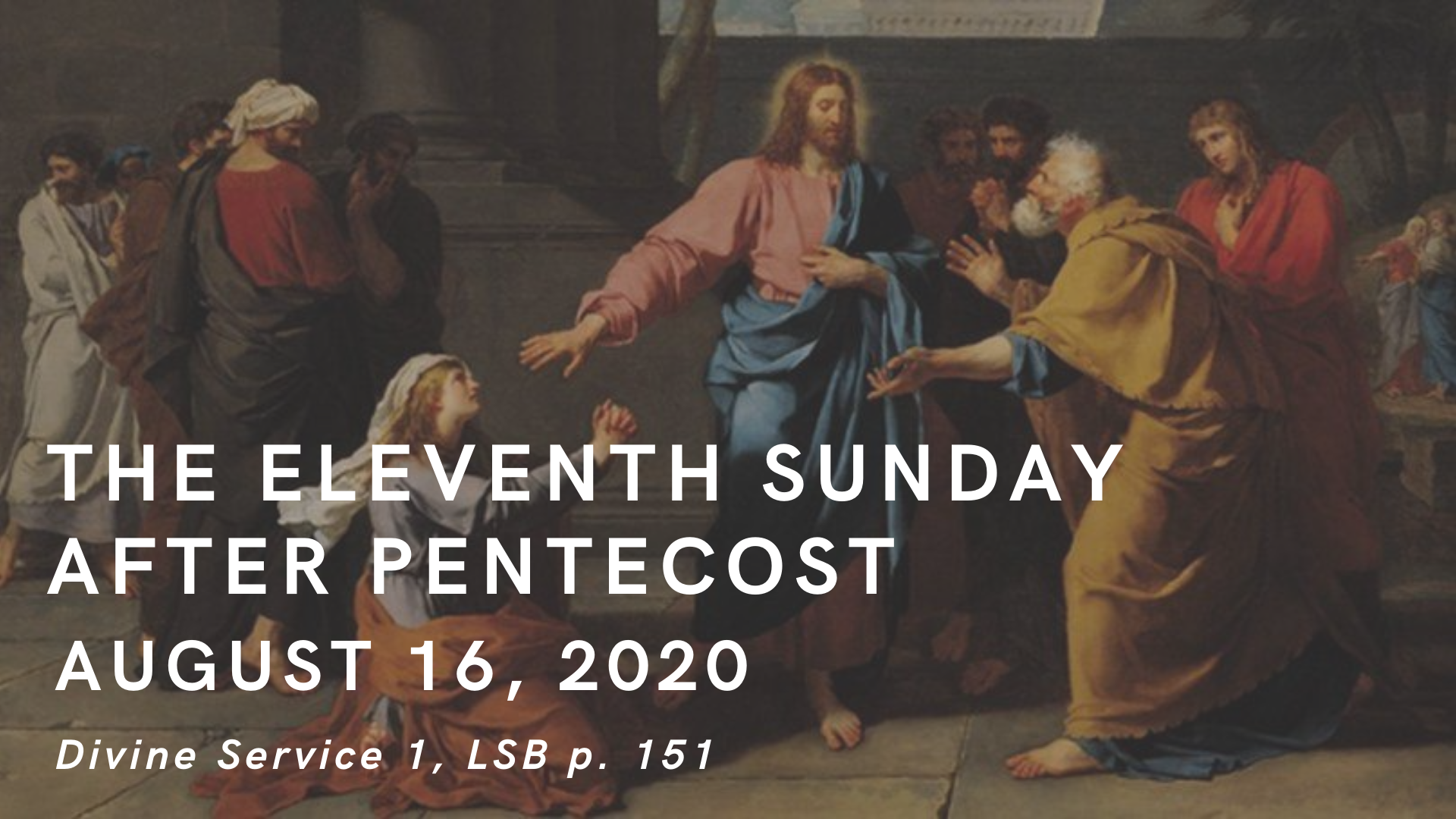
The Church Lives Under the Cross of Christ and Prays in the Hope of His Mercy
By her persistent prayer that Jesus would have mercy and help her (Matt. 15:22, 24), and even in the face of His initial silence and apparent rejection (Matt. 15:23–26), the Canaanite woman boldly confessed her faith in Him (Matt. 15:27–28). Her beautiful example encourages us to cling to the words and promises of the Gospel, even in the face of the Law that accuses and condemns us. “For the gifts and the calling of God are irrevocable” (Rom. 11:29), and His Law “has consigned all to disobedience” for the very purpose “that he may have mercy on all” (Rom. 11:32). Hence, the woman’s faith and hope were not disappointed, but her prayers were answered in the mercy of Christ. Not only does He grant us the crumbs from His table, but He also feeds us with “the children’s bread” in the house of His Father (Matt. 15:26–27). He has brought us to His “holy mountain,” and He makes us joyful in His house, where He hears our prayers and accepts our sacrifice of praise upon the altar of His cross (Is. 56:7).